
Defining Technology: Key Concepts and Applications
What is Technology?
Technology encompasses the methods, systems, and devices that facilitate human interactions and processes, significantly shaping our lives. It is often understood as the application of scientific knowledge for practical purposes. As defined globally, Technology represents a broad spectrum, ranging from simple tools to complex systems designed for a specific function. The integration of technology into various sectors has transformed how we communicate, work, and manage our daily lives.
Types of Technology
Technology can be categorized in numerous ways, depending on its purpose and the realm in which it operates. Below are some key types:
- Information Technology (IT): Involves computers and telecommunications to store, retrieve, and send information.
- Communication Technology: Enables the exchange of information through various mediums, including the internet, smartphones, and broadcasting systems.
- Biotechnology: Utilizes biological systems and organisms in industrial and medical applications, revolutionizing fields like healthcare and agriculture.
- Automotive Technology: Encompasses advancements in automotive design, manufacturing, and maintenance, focusing on enhancing efficiency and safety.
- Energy Technology: Deals with the production and use of energy, including renewable sources like solar and wind power.
The Role of Technology in Modern Life
Technology plays a pivotal role in contemporary society, influencing nearly every aspect of life. It enhances productivity in workplaces, creates more engaging and effective learning environments in education, and facilitates instant communication across the globe. Moreover, technology has reshaped industries, led to the emergence of new business models, and contributed significantly to economic growth. The integration of technology into healthcare has improved patient outcomes through telemedicine and electronic health records, while smart home technology allows for enhanced control and efficiency in energy use.
The Evolution of Technology: A Historical Perspective
From Industrial Revolution to Digital Age
The journey of technology is marked by several key phases, with the Industrial Revolution being a turning point that transformed agrarian societies into industrial powerhouses. It introduced mechanization, leading to increased production capabilities and urbanization. The emergence of the digital age marked the transition towards information management and automation. As the world entered the 21st century, we witnessed unprecedented advancements, including the rise of the internet and mobile technologies, which have become fundamental to everyday life.
Key Milestones in Technological Advancements
Throughout history, there have been pivotal milestones that have significantly shaped technology:
- The Printing Press (1440): Revolutionized the distribution of information, leading to enhanced literacy and the spread of ideas.
- Electricity (19th Century): Transformed industries and daily life, paving the way for numerous inventions including the light bulb and telegraph.
- The Telephone (1876): Changed communication forever, reducing the time it takes to connect people across great distances.
- The Internet (1960s): Created a connected world, allowing for the rapid exchange of information and the birth of a new digital economy.
- Smartphones (2000s): Integrated computing power and communication in a handheld device, changing how we live, work, and interact.
The Influence of Technology on Society
Technology profoundly affects social structures, relationships, and cultural norms. It has the potential to bridge gaps between communities and foster global collaboration. However, it can also lead to discrepancies in access, often referred to as the digital divide, where some populations lack access to advanced technologies. The societal influence of technology extends to sectors such as politics, where social media platforms have altered the landscape of communication and information dissemination, creating new forms of engagement.
Modern Technology Trends: What’s Shaping Our Future
Artificial Intelligence and Machine Learning
Artificial Intelligence (AI) and Machine Learning (ML) stand at the forefront of modern technological advancements. AI systems emulate human intelligence, performing tasks such as visual perception, speech recognition, and decision-making. Machine Learning, a subset of AI, enables algorithms to learn from data and improve their performance over time. These technologies are being utilized across various sectors—from healthcare diagnostics to autonomous vehicles—enhancing efficiency and providing new insights into complex problems.
Blockchain and Its Applications
Blockchain technology is gaining traction, fundamentally changing how transactions are recorded and managed. It provides a secure and transparent method for verifying transactions without central authorities, which can reduce fraud and enhance trust in various systems. Blockchain has potential applications beyond finance, including supply chain management, healthcare record-keeping, and identity verification, thereby impacting numerous industries.
Virtual and Augmented Reality Innovations
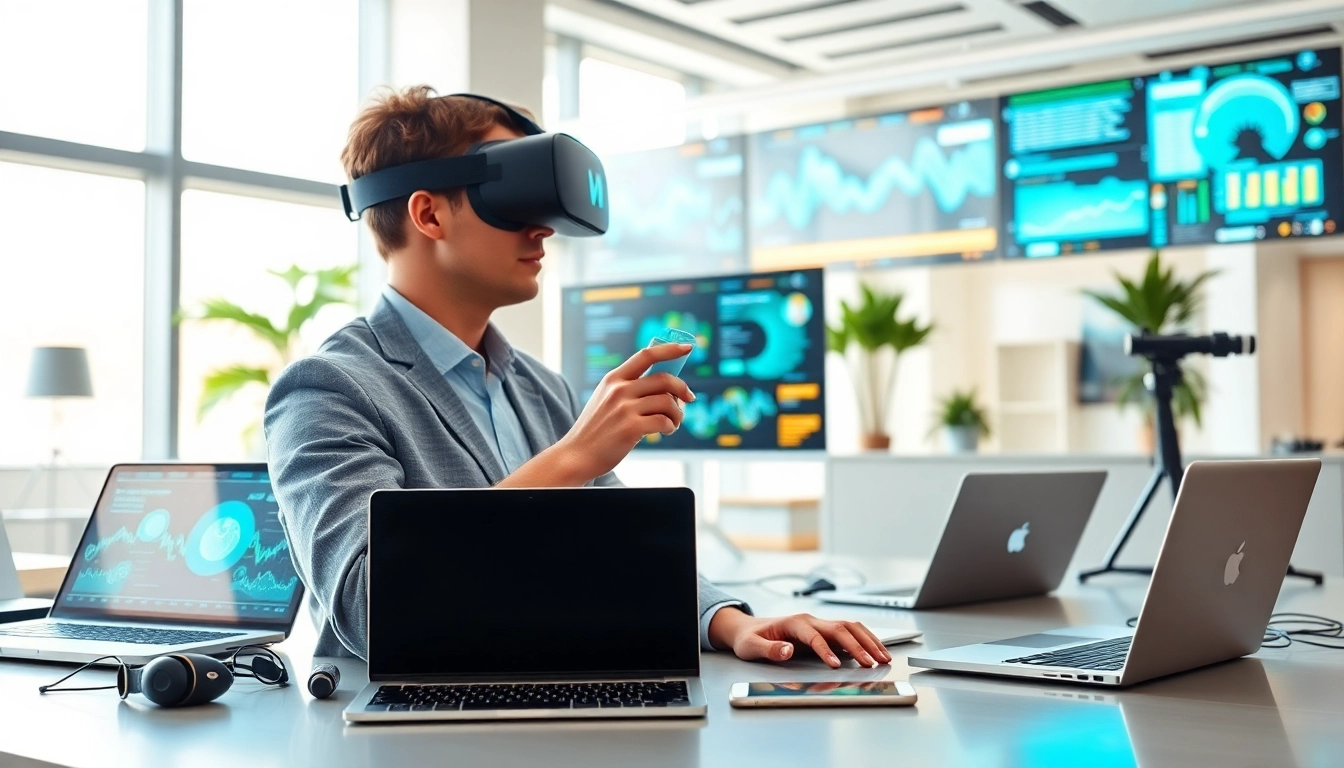
Virtual Reality (VR) and Augmented Reality (AR) technologies are transforming experiences in gaming, education, training, and even therapy. VR immerses users in a completely digital environment, while AR overlays digital elements onto the real world. These technologies can enhance learning through interactive simulations, provide immersive entertainment experiences, and assist in designing complex engineering projects by visualizing them in three dimensions.
Challenges and Solutions in Technology Implementation
Common Barriers to Technology Adoption
Despite the benefits of adopting new technologies, organizations face numerous challenges. Notably, resistance to change among employees can hinder the integration of technology into existing workflows. Additionally, limited technical infrastructure may restrict access to advanced tools and resources. Organizations often struggle with high implementation costs and the need for extensive training programs, which can delay the realization of expected benefits.
Ethical Considerations in Technology Usage
Ethics in technology is becoming increasingly important as advancements raise questions about privacy, security, and the implications of automation. The use of AI, for instance, prompts concerns regarding bias in algorithms and the ethical treatment of data. Organizations need to adopt ethical frameworks that prioritize user privacy and promote equitable access to technology, fostering responsible innovation.
Best Practices for Successful Technology Integration
To ensure successful technology integration, organizations can adopt several best practices:
- Conduct Thorough Research: Understand the technology’s capabilities and limitations before implementing it within business processes.
- Engage Stakeholders: Involve employees at all levels during the decision-making process to foster buy-in and ease transitions.
- Invest in Training: Provide comprehensive training to ensure that employees feel confident and are proficient with new technologies.
- Monitor and Adapt: Continuously assess the effectiveness of technology implementations and be open to making adjustments as necessary.
Measuring the Impact of Technology: Metrics and Evaluation
Key Performance Indicators for Technology Effectiveness
To understand the impact of technology, organizations should leverage Key Performance Indicators (KPIs) tailored to their specific goals. Some common KPIs include:
- Productivity Levels: Measure output before and after technology implementation to assess improvements in efficiency.
- Employee Satisfaction: Surveys can gauge employee engagement with new tools, their satisfaction, and comfort levels.
- Cost Savings: Analyze financial metrics, comparing operational costs pre-and post-implementation in order to determine ROI.
- Customer Satisfaction: Evaluate how technology changes affect customers through feedback loops and customer interaction metrics.
Evaluating Technology’s Return on Investment (ROI)
Calculating the ROI of technology involves assessing both direct and indirect benefits against the initial and ongoing costs. A clear framework incorporating all relevant financial metrics helps organizations determine whether an investment in technology is worthwhile. This includes considering productivity improvements, cost savings, revenue growth, and qualitative benefits like enhanced customer satisfaction or improved employee morale.
Case Studies: Success Stories in Technology Applications
Several organizations have successfully leveraged technology to enhance operations and drive growth. For instance, a leading manufacturer implemented IoT sensors in machinery to monitor performance in real-time, resulting in a significant reduction in downtime and improved maintenance processes. In the education sector, schools using AR technology found that student engagement increased dramatically, leading to better learning outcomes. These success stories highlight the transformative potential of technology when aligned with strategic goals and supported by strong management practices.